
Elderberry
How To Identify
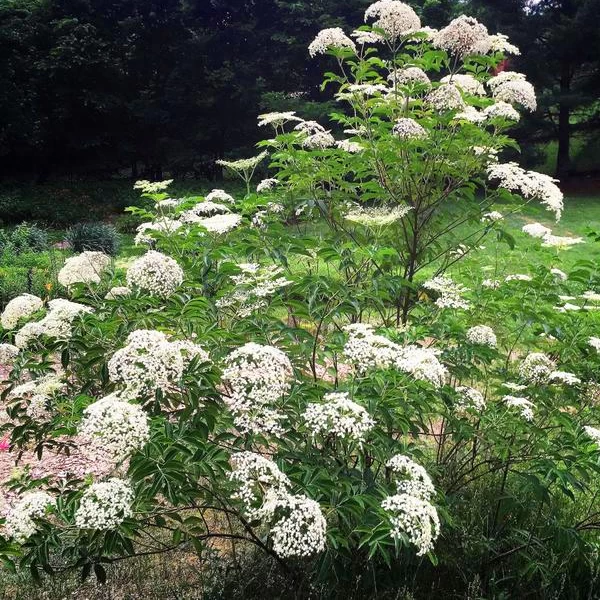
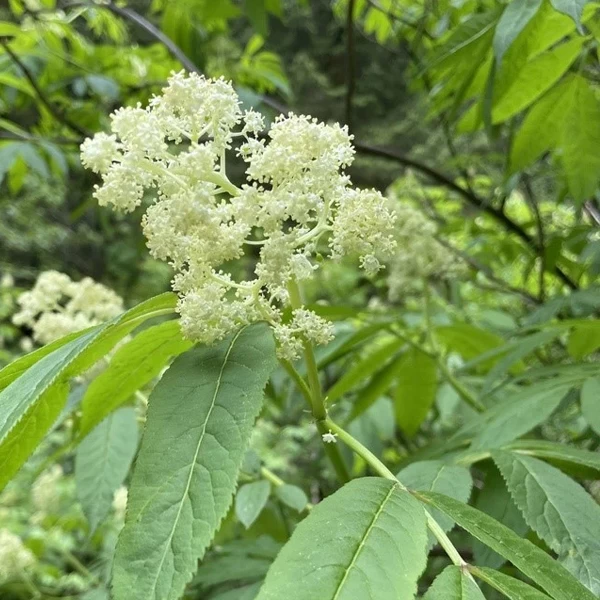
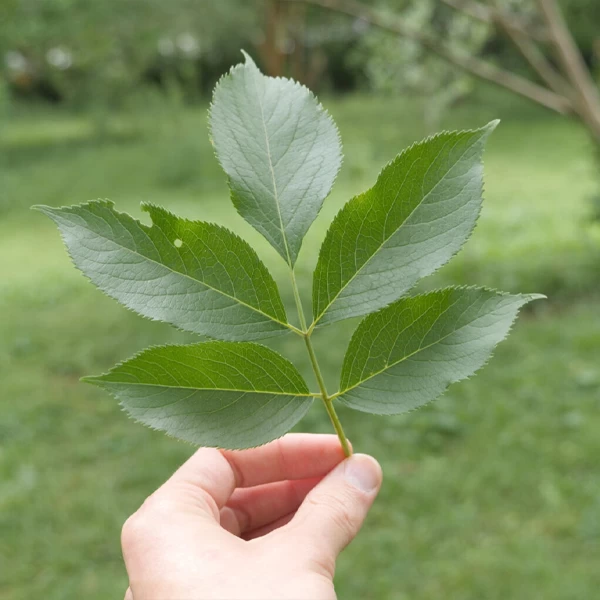
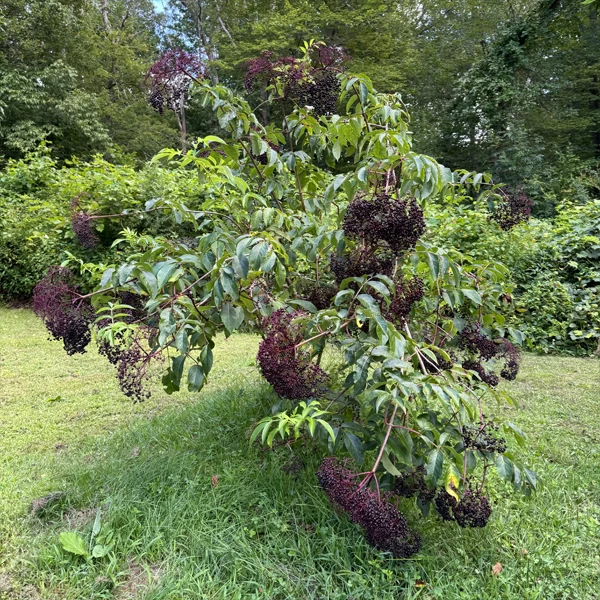
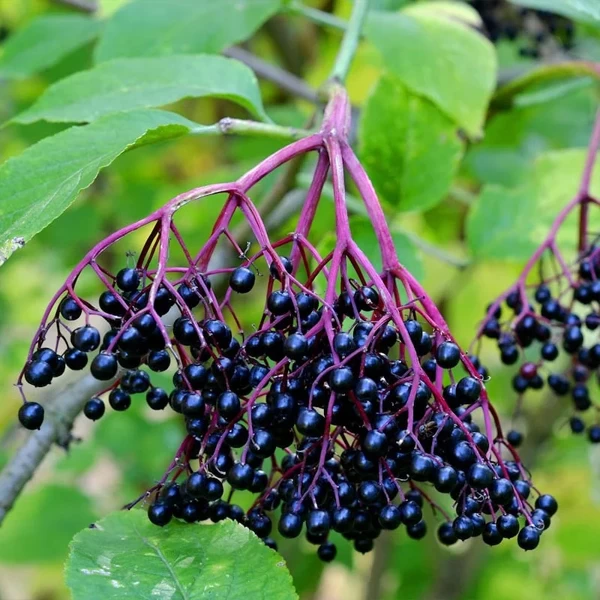
Elderberry leaves are serrated compound leaves with 5-11 (most commonly 7) lance-shaped leaflets that are arranged opposite each other on the stem. Elderberry young stems are smooth and a bright green but become woody and grayish-brown as they age. The mature stems feature prominent lenticels (small, warty bumps) as they age. The older stems will have a soft, white pith inside. Elderberry flowers in late spring to early summer, producing clusters of small, creamy-white flowers that are arranged in flat-topped or slightly rounded umbels or umbrella shaped. In late summer these will turn into green berries, darkening until they become dark purple to black, weighing down the branches.
Benefits
The berries are high in antioxidants, including anthocyanins (which give them their dark color), flavanols (support your heart health by lowering your blood pressure) phenolic acids, Vitamin A and Vitamin C. These antioxidants help protect the body’s cell from damage caused by free radicals and is commonly used and promoted for immune system support and cold or flu relief. The compounds in elderberries are believed to help your body fight off infections and have antiviral and anti-inflammatory effects. There is some research that suggest elderberries also help your cardiovascular health by reducing cholesterol levels, lower uric acid levels and improving blood sugar levels.
How To Find
Wild elderberries thrive in open sunny areas with moist soil. Areas along creek banks, ditches, forest and road edges near ditches or down embankments where water drains often will have wild elderberry plants. Be sure to avoid areas that may be contaminated by state or federal departments that are spraying to control weeds or pests. The best time to find the wild elderberry plants is in late spring to early summer when they are covered with their large cluster of white flowers. The elderberry typically grows as a multi-stemmed bush, growing 5 to 12 feet tall and will naturally spread.
Gathering
If you want to harvest the elder flowers, you want to do this in late spring when the clusters are fully open and cream white using sharp pruners or shears.
To harvest the elderberry fruit, wait until it is dark purple to black in late summer, early fall, cut the entire cluster with shears or scissors. Discard any green berries. Bring a basket or bag with room to harvest without crushing the berries.
The berries can be removed by hand, with a fork to gently comb the berries off the stems or you can freeze the cluster of berries and once frozen, pop the berries off the stems. Be sure to remove all unripe berries before freezing. It is very important that you remember to remove all unripe berries, stems or leaves as they are toxic. Leaves, stems, bark, roots and UNRIPE (green or red) berries contain cyanogenic glycosides, which can cause nausea, vomiting or diarrhea if consumed!
How To Use
The flowers can be used in a tea, cordials, infused vinegar or flavoring for desserts or drinks.
Cooked berries can be made into Elderberry syrup or tinctures (used for immune support), or made into jam, jelly, pies, wine, cordials, tinctures, juice, muffins and cobblers.
Preservation
The fresh elderberries have a short shelf life so either processes them quickly or freeze them for later use. Clusters can be stored in the refrigerator for a day or two. If you are freezing the berries, destem and sort then spread in a single layer on a baking sheet before transferring to a container for longer term storage. Berries can also be dehydrated to dry them for storage. Making the berries into an alcohol tincture, a jam or a jelly will also increase the shelf life.