Friendship Bread Starter
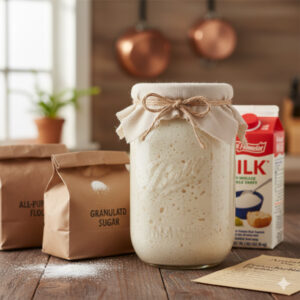
Bread starters come from the core principal of sharing food and creating community ties. This recipe hit across the US in the 1990's but for centuries families have shared starters in countries around the world. This has helped feed communities, brought people together and created traditions. Though not a traditional sour dough, this is starter does not use yeast on relies on natural fermentation from wild yeast in the environment and flour. The process involves combining flour, sugar and milk and following a 10-day activation and feeding schedule with no discard along the way.
Equipment
- 1 set measuring cups and spoons
- 1 large non-metal bowl or jar or a 1-gallon Ziploc Bag
- 1 non-metal spoon (wooden or plastic)
- 1 loose cover (plastic wrap or a clean cloth if using a bowl)
Ingredients
Day 1: Initial Starter Mix
- 1 cup all-purpose flour
- 1 cup granulated sugar
- 1 cup milk
Day 6:
- 1 cup all-purpose flour
- 1 cup granulated sugar
- 1 cup milk
Day 10:
- 1 cup all-purpose flour
- 1 cup granulated sugar
- 1 cup milk
Instructions
Day 1:
- Combine the flour, sugar and milk for day one in your non-metal container and mix well. Cover loosely and let sit at room temperature or seal bag
Days 2 through 5:
- Just stir in container (mash the bag if using a Ziplock) once a day to mix the contents, release any accumulated air from the bag
Day 6:
- Add flour, sugar and milk for day 6 ingredients to your starter. Stir or mash the bag until well combined, recover container or seal bag
Days 7 through 9:
- Stir container or mash the bag once a day
Day 10:
- Add flour, sugar and milk for day 10 ingredients and mix well. The starter is now ready to separate and use.
Next Steps:
- After day 10, pour the entire contents into a non-metal bowl. Measure out one (1) cup portions of the starter to use in your baking recipe or to save for your next batch.
- Divide the remaining starter into 1 cup portions - you should have about 4 cups left - and use for baking more breads or share these starter with friends along with the instructions.
- The 1 cup portions can also be frozen for later use. Avoid using metal bowls or utensils if possible.