
Staghorn Sumac
How To Identify
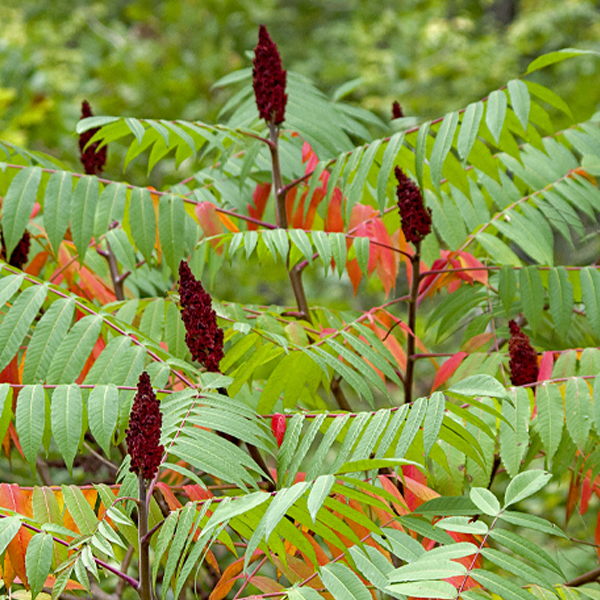
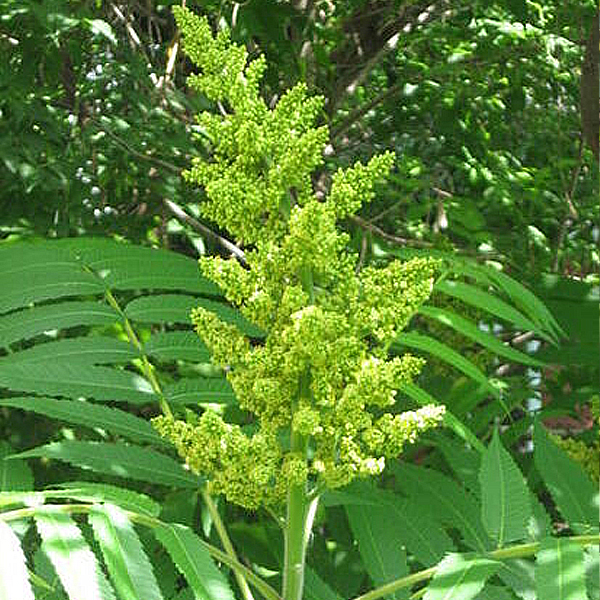
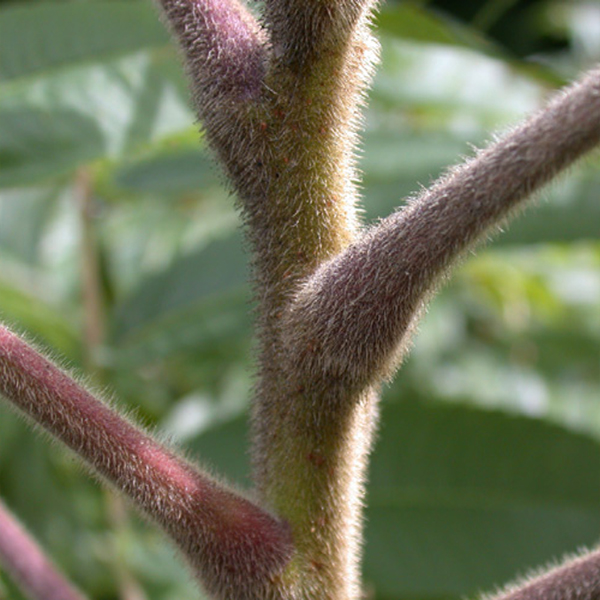
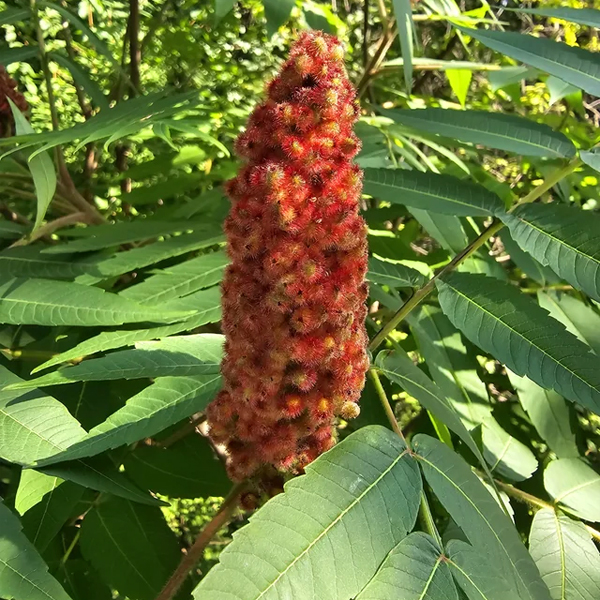
Staghorn Sumac (Rhus typhina) is a deciduous shrub in the cashew family. It is a flowering North American plant (natively) that can take the form of shrubs or trees that grow up to 25 feet tall. The female variety produces vibrant red to rust colored fuzzy berry clusters that grow in an upward cone shape called drupes. The alternate, compound leaves are pointy with toothed margins. The stems, which are green when young, turn brown with age, have a tick inner pith and are fuzzy like that of a stag’s antlers giving its name. Please note: staghorn sumac should not be confused with poison sumac (Toxicodendron vernix), which features drooping white berries and grows in wet, swampy areas and is actually a completely different genera of plant.
Benefits
The “ripe” berries contain high levels of polyphenols and flavonoids that help neutralize cellular damage from free radicals. Traditional herbal uses include making cold infusions from the bark, roots, or berries to help ease diarrhea, soothe sore throats, and reduce inflammation. The berries provide a tart, sour flavor and act as a natural source of ascorbic acid (vitamin C). Early studies on sumac species suggest potential benefits for supporting healthy blood sugar and lipid regulation. (see “How To Use” below)
How To Find
Wild staghorn sumac thrives in dry sunny open places, on the sides of highways and along fence lines, at the edges of forests and meadows, and in other open areas of southeastern Canada, the northeastern and midwestern United States but is now also found in several regions worldwide. Be sure to avoid areas that may be contaminated by state or federal departments that are spraying to control weeds or pests. The best time to find (for harvesting) the staghorn sumac is in late summer to early fall when the female plants are covered with their large cluster of red to rust colored fuzzy berries. The staghorn sumac typically grows as a multi-stemmed shrub, growing 5 to 25 feet tall and will naturally and invasively spread.
Gathering
The berries, also called drupes, are ready to be harvested when they have turned red to rust colored. This typically happens in late summer to early fall. Be sure not to harvest right after it rains, as this washes away the desired acids that give the plant its tart flavor. Wait for a dry day.
Sumac can be harvested throughout winter; however, the flavor may not be as strong as when gathered in the late summer.
To harvest sumac, simply break off the berry cones (red fuzzy flower clusters) on a dry day and collect them in a bucket or bag. Strip the tiny velvety seeds by rolling them off the stem with your thumb and forefinger. Use shears to snip off young shoots and leaves, or to snip off a branch or two for its inner and outer bark.
How To Use
The young shoots, leaves, bark, and berries have many medicinal uses. You can make an infusion or tincture from bark, leaves, or fruit and use it as an external wash to help stop excessive bleeding, weeping sores or skin irritations. Drinking a leaf, bark, or berry infusion can strengthen the bladder and kidneys, helping to resolve mild incontinence and prevent bedwetting. It can also help the intestines to end bouts of diarrhea. Sumac leaf and bark infusions and tinctures are good for drying up a persistent cough, soothing sore throats, and relieving mouth sores. Famously, staghorn sumac can be made into sumac lemonade by steeping approximately 5 cups of “ripe” berries in 1 gallon of cool water for 12-24 hours and then straining through muslin or a coffee filter. Optionally, you can sweeten this “lemonade” with honey, maple syrup, sugar or your choice of sweetener to taste. Red sumac berries, when separated from the seed, can be ground into a powdered spice that is used as an ingredient in spice blends such as Za’atar. See recipes in the video:
Preservation
To preserve staghorn sumac leaves and berries (flower heads), place them into separate paper bags, or on a screen (window screen or similar) and allow them to dry in a dry dark place with good airflow. They can also be dehydrated using very low or no heat (105° tops) in a standard dehydrator or freeze dried. Oven drying isn’t recommended as the heat can damage the medicinal benefits and flavor. Then store the dried material in an air-tight container for up to 1 year. They can also be made into an infusion or tincture for long term storage.