
Spicebush
How To Identify
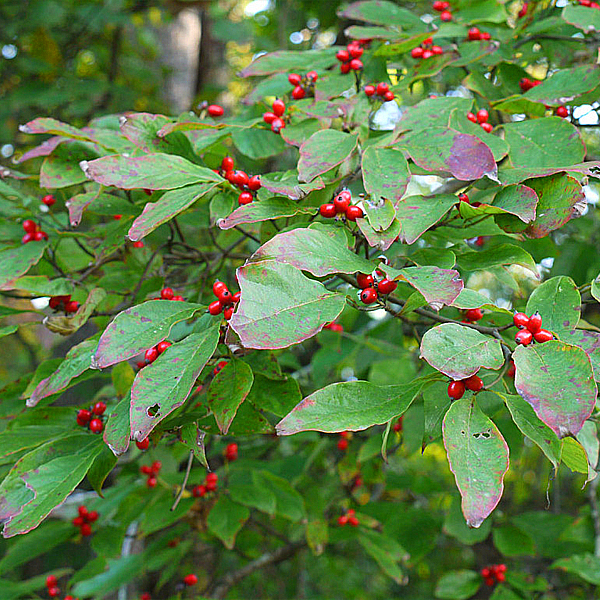
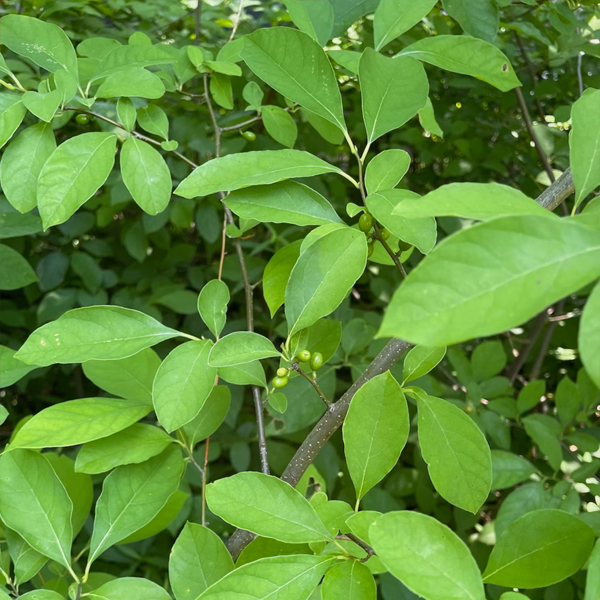
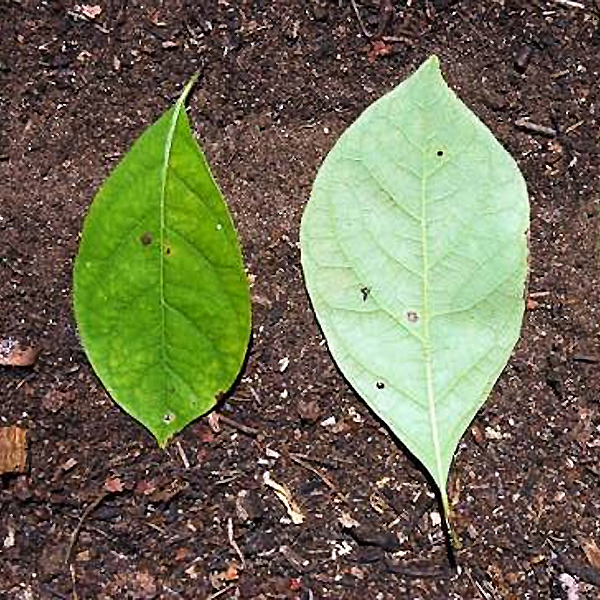
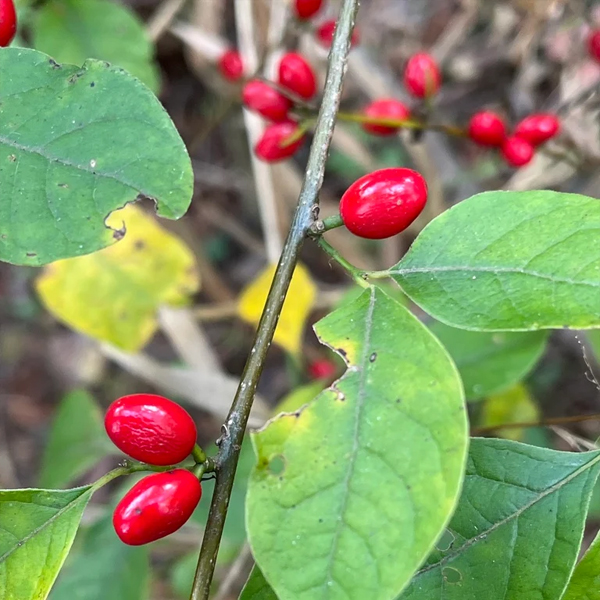
Spicebush or Northern Spicebush (Lindera benzoin) is a multi-stemmed, deciduous shrub typically growing 6 to 15 feet tall in damp woods and forest understories. The easiest way to identify it, is to crush a leaf or twig between your fingers and it will emit a strong, pleasant spicy-citrus or allspice-like aroma. The vibrant green leaves are simple, alternating, elliptical to oval shaped with smooth margins (no teeth or lobes) and turn a bright golden-yellow in the fall. The fruit starts as small green drupes in late spring to early summer and ripens into glossy scarlet or bright red berries from mid-August through October. Some of its common names are “Spice Berry Bush”, “Fever Bush” and “Appalachian Allspice”.
Benefits
Native American tribes—including the Cherokee, Iroquois, and Ojibwa—used every part of the plant. They steeped bark, twigs, and leaves into teas to treat fevers, colds, coughs, rheumatism, intestinal parasites, and dysentery, or used them in sweat baths for body aches. The indigenous communities would dry and powder the aromatic red fruits and leaves to flavor meats, soups, and stews. Early European settlers planted spicebush in their home gardens for both household seasoning and home remedies. During the Revolutionary War, American colonists faced trade blockages with England. They dried and powdered the pungent red berries to use as a local substitute for allspice, and used the dried bark instead of cinnamon—giving the plant its common name, “spicebush”. Although Spicebush does have vitamins like Vitamin C and A, it is highly valued for its unique macronutrient density, essential oils, and medicinal compounds. Spicebush drupes (berries) have some of the highest lipid (fat) and protein contents of any tested wild fruit. The berries are nearly 50% fat by weight, providing an exceptional energy density. They are rich in aromatic compounds such as camphor and sesquiterpene lactones, which provide its signature allspice-and-pepper flavor profile and contain butanolides, lucidones, and aporphine alkaloids. These compounds are actively studied for their potential anti-inflammatory, antioxidant, and therapeutic properties that can stimulate the production of digestive enzymes, which can help ease gas, bloating, and improve overall nutrient absorption. Historically known as “fever bush,” teas brewed from its twigs and leaves act as a natural diaphoretic, meaning they promote sweating to help the body cool down during a cold or fever.
How To Find
Spicebush is native across eastern and central North America, stretching from Maine and Ontario down to Florida and Texas. Look in low, deciduous woodlands, shaded forest understories, bottomlands, ravines, swamp margins, and along stream banks or riparian corridors where the soil stays moist.
Gathering
Gather the fruits in the fall when fully ripe and red. These do have seeds which it is not recommended to just drop on the ground as they are considered an invasive species. If using the leaves, choose the heathiest looking leaves that are free of disease and rot spots earlier in the season before the fall colors show. Young, live twigs can be collected throughout the year but are most flavorful in the fall and winter.
How To Use
You can use nearly every part of the spicebush including the berries, leaves, twigs, and bark for culinary seasoning, comforting teas, and traditional remedies. Harvest red berries in late summer, dry them at a low temperature, and grind them into a powder to use as a warm, peppery substitute for allspice or cinnamon in baked goods like spice cakes, breads, and cookies. Use green or red berries fresh off the plant. Remove the seeds and use to add a pungent, citrusy kick to curries, fermented drinks and ice cream bases. The dried seeds can be used as a substitute for black pepper corns or crushed and used as a shaker. Pick glossy green leaves in the spring or summer. Steep them fresh or dried in a tea ball; mix them with mint for the best flavor. Chop fresh twigs or bark year-round and simmer them in water for 10 to 15 minutes to create an orange-hued, soothing tea with a mild citronella or warming spice note. The volatile oils in the plant have traditionally been used to settle an upset stomach when brewed into a warm tea. A decoction made from simmering the inner bark acts similarly to ginger, helping to induce sweating during a cold. Studies and traditional uses note that the bark extracts or root decoctions can be applied as a wash or tincture to help address fungal issues like athlete’s foot.
Preservation
To preserve spicebush berries, harvest bright red berries in early fall. Dry them in a dehydrator overnight at low heat (around 135°F). Once completely dry, grind them into a powder for spice rubs or keep them whole. Because spicebush berries have a high volatile oil content, storing them at room temperature can cause them to spoil or go rancid. Keep whole fresh or dehydrated berries in airtight containers in the freezer for long-term storage. Some people prefer to separate the sweet, allspice-flavored outer pulp/skin from the peppery inner seed before preserving, as they become nearly impossible to separate later. The seeds can also be separately preserved in the same manner. Harvest fresh spicebush twigs in fall or winter when their resinous aroma is strong. They can be used fresh or air-dried in a cool, dark place to make teas and fermented flavorings. Use spicebush leaves fresh during spring and early summer. Avoid drying the leaves, as drying strips their flavor and makes them bitter.