
5 Ways to Overwinter Potted Trees and Shrubs
Overwintering potted trees and shrubs can be a bit tricky, but it’s definitely doable. Here are five methods you can use to keep your plants healthy and thriving throughout the cold months.
- Bring Them Indoors
This is the most straightforward method, especially for smaller plants. If you have enough space indoors, bring your potted trees and shrubs inside to a cool location such as a walk-in basement. Avoid placing them near heat sources or cold drafts.
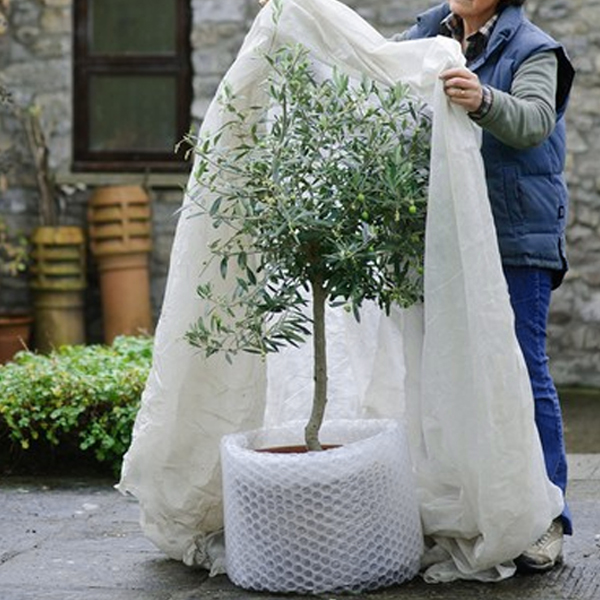
- Move Them to a Protected Area Outdoors
If you don’t have room indoors, you can move your plants to a sheltered spot outdoors. This could be a root cellar, greenhouse, garage, or even a shed. Make sure the area is protected from harsh winds and heavy snowfall and ensure that it is cool, dark, and has good ventilation.
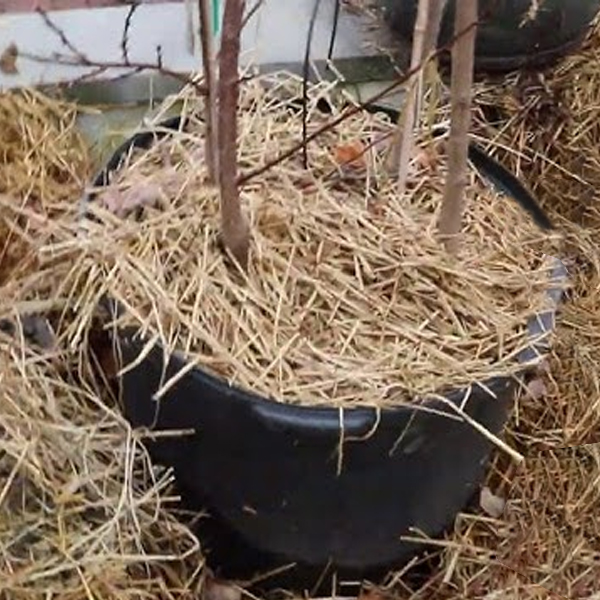
- Insulate The Pots
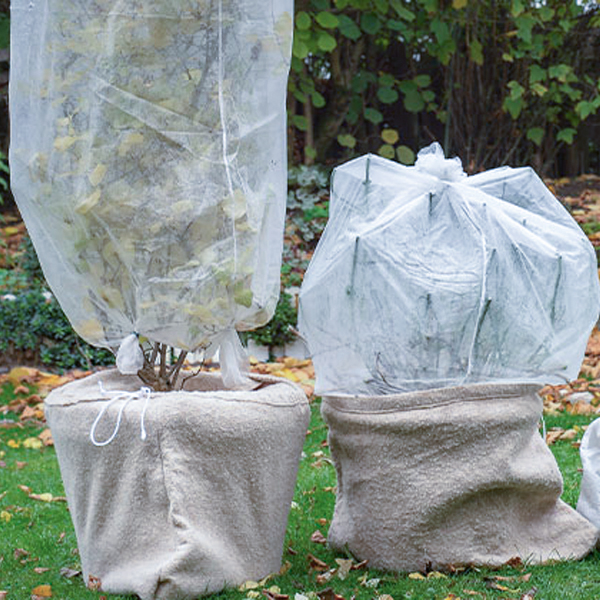
Applying a thick layer of mulch around the base of your plants can help protect their roots from frost. Mulch also helps to retain moisture, which is important during the dry winter months. Consider wrapping the pots in burlap or bubble wrap. You can also put the pots in large cardboard boxes and stuff the open spaces and corners with fall leaves or straw.
- Mulch Around the Roots
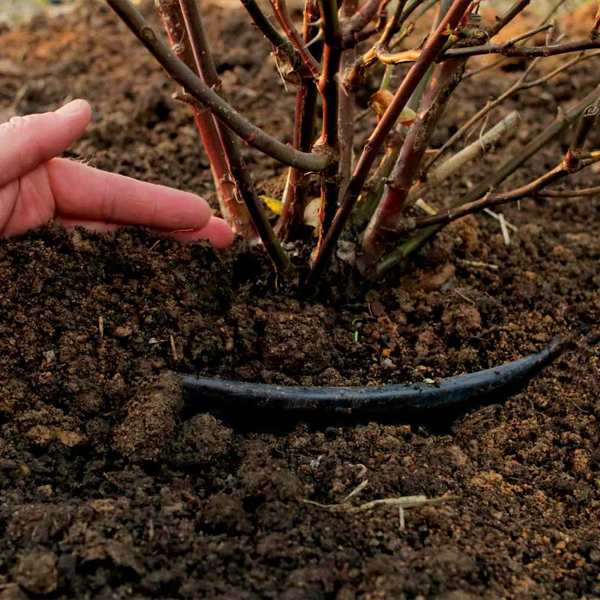
Temporarily planting or burying the trees / shrubs while still in their pots for the winter is another great method. Just dig up the pots in the spring and plant them in their final location.
- Potting Up
If you’re worried about your plants not surviving the winter in their current pots, you can pot them up into larger containers. This will give their roots more room to grow and help them better withstand the cold.
Additional Tips:
- Water Properly: During the winter, your plants won’t need as much water. However, it’s important to avoid letting the soil dry out completely.
- Prune Carefully: If necessary, prune your plants before winter to remove dead or damaged branches. Avoid heavy pruning during the cold months.
- Check Regularly: Periodically check your plants for signs of stress or damage. If you notice any problems, take steps to address them promptly.
By following these tips, you can help your potted trees and shrubs survive the winter and thrive in the spring.
Of course, what a great site and instructive posts, I will bookmark your site.Have an awsome day!
I love what you guys are up too. This type of clever work and coverage! Keep up the amazing works guys. I’ve incorporated you guys to our blog roll.
I’m interested in making wild lettuce extract. I have some questions. We both use pain medicine and there’s no guarantee our doctor is going to continue prescribing any. She’s already asked us to think about maybe reducing the doses we take. Can you give some idea of how much pain relief that you and your wife feel (everyone is different, of course) compared to a commercial pain reliever like codeine, hydrocodone, oxycodone, fentanyl, morphine, Demerol (meperidine), etc. I can use a tool to give approximate equivalents to common pain relievers and get some idea of whether I would be able to make enough to take care of our needs without a prescription. We don’t use fentanyl or Demerol but
Another question is whether plain garden lettuce (not iceberg, which is actually a cabbage) would be worth trying, allowing it to bolt in mid-summer and harvest it when the flower is budding, or perhaps after it sets seeds? Are the seeds of regular garden lettuce or wild lettuce worth harvesting?
Another thing is if there would be any harm or reason not to include the stems and use a high powered blender? The alcohol should penetrate from the ends of the cuts and soak the center of the stem, and if the stems break lengthwise also, they would allow easy extraction.
One last thing is whether, if you’re out in the fields and woods, can you use the latex’s pain relieving power by licking the sap or chewing some leaves and stems? It may not sound tasty, but I’d like to know if it has pain-relieving power either through digestion while green or if you spread some latex over a cut, whether it would help lessen the pain where you got cut or a sticker from a blackberry bush scratched your arm. You are welcome to email me at the address I left on the web form below if you like.
We’re both learning how to identify wild plants and fungi, and really enjoy oyster mushrooms, even more than the much-cherished morel mushrooms that most mushroom hunters seek for about this time of year here in southern Ohio. We’re going to make our own yarrow salve this year and probably some wild lettuce extract, possibly some other things we can access near where we live.
That’s a difficult question to answer as there are so many different kinds of pain. For me, it works well for sore muscles but didn’t work that good for a really bad tooth ache. I don’t believe it’s as strong as some opioids but… It’s not addictive and has no life-threatening side effects that I’m aware of. As far as potency, there are so many variables that I tell most people to compared it to about 1000mg of Tylenol or 500mg of Naproxen because most batches, if not done at the right time or done the right way, will not meet their full potential. Also, you control the dose based on how much you take. Start with 1/4 tsp. increasing the amount based on how strong you need it to be.
As far as whether you can use normal leaf lettuce… the quick answer is no. Garden grown, domesticated lettuce varieties do not have the same compounds as wild lettuce (Lactuca virosa).
Harvesting the seeds of wild lettuce would allow you to plant them in a spot that you can easily find them the following year.
I usually suggest to use both stem and leaves. The stem has the most sap but is more difficult to break down and because I’m LAZY and have an abundance of wild lettuce, I choose to use mostly if not only the leaves because it’s easier and with enough product, makes just as strong of a tincture. If you don’t have lots of wild lettuce in your area, use all of the plant to make your extraction.
The sap can be collected fresh and taken orally or applied topically for joint pains and arthritis. Marilyn has used it topically when she had shingles and says that it helped with the nerve pain. You would need to collect quite a bit of the sap though, that is why extracting a tincture is more efficient.
Foraging and herbology seem to be more popular lately. With the lack of trust in big pharma and self-reliance on an upswing, more and more people are rediscovering the old methods. Good luck with your journey of becoming more self-reliant.
I’m going to move this comment to the Foraging Wild Lettuce post (https://www.keepingitriel.com/foraging-wild-lettuce/)